
Draftt makes tech debt ownership and accountability visible across every team, cloud, and environment. Centralized governance with distributed accountability, at every level of the organisation.
Ownership debt is the distance between who built a system and who's actually responsible for it today. It doesn’t announce itself until it imapcts the business and you can't find an accountable team.
of cloud resources in a typical enterprise have missing or stale ownership data. No clear owner, no clear accountability.
average time wasted per finding on identifying the right owner to contact and assign, before remediation has even started.
cloud surface complexity expected by 2027, with no corresponding growth in headcount to maintain ownership manually
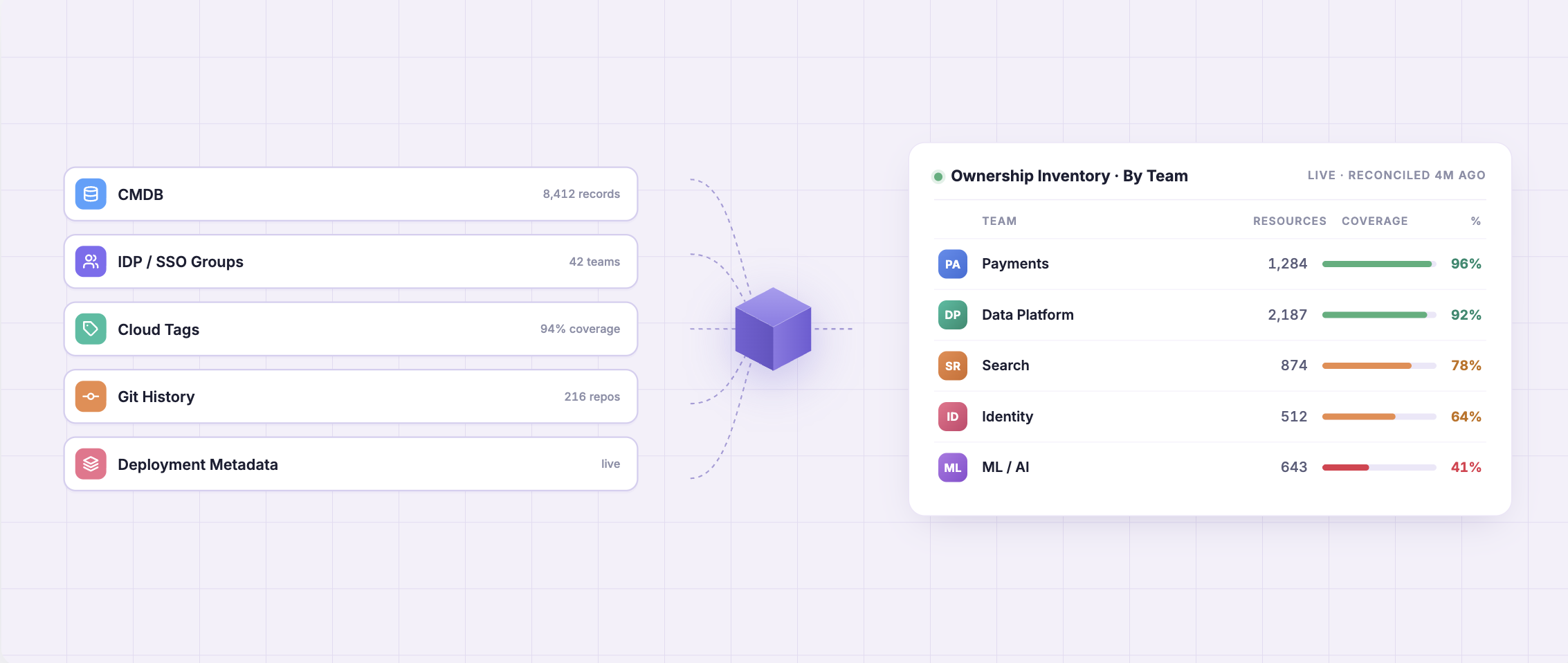
Your team's complete inventory
Continuously updated ownership mapping across every team, cloud, and account. Filtered by team, platform, or application. Operational visibility across the entire tech stack without manual inventory work or fragmented data sources.

Full context for every resource
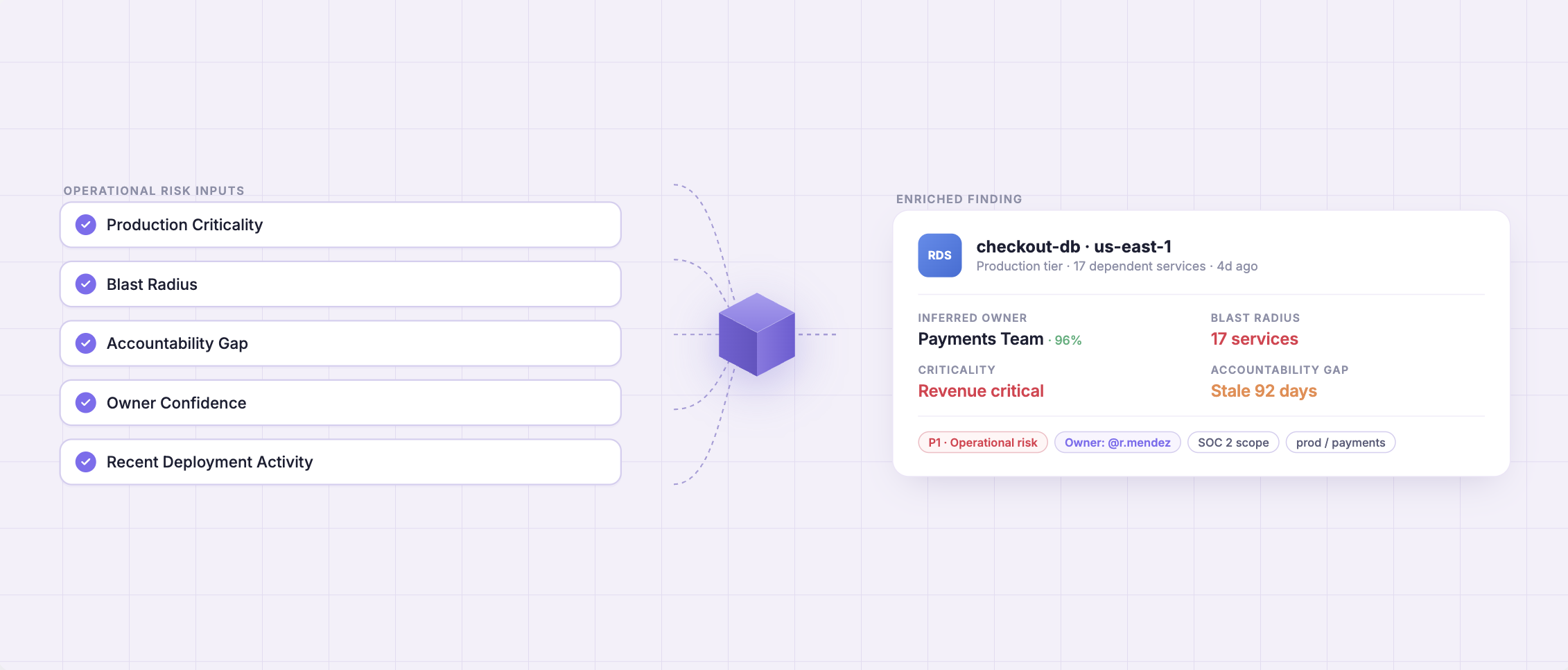
Draftt correlates ownership data, production criticality, and governance context to prioritize operational risk. Every finding is scored by business impact — production exposure, blast radius, and accountability gaps — so engineering teams focus on what matters most, not what was flagged loudest.
Act on your tech debt
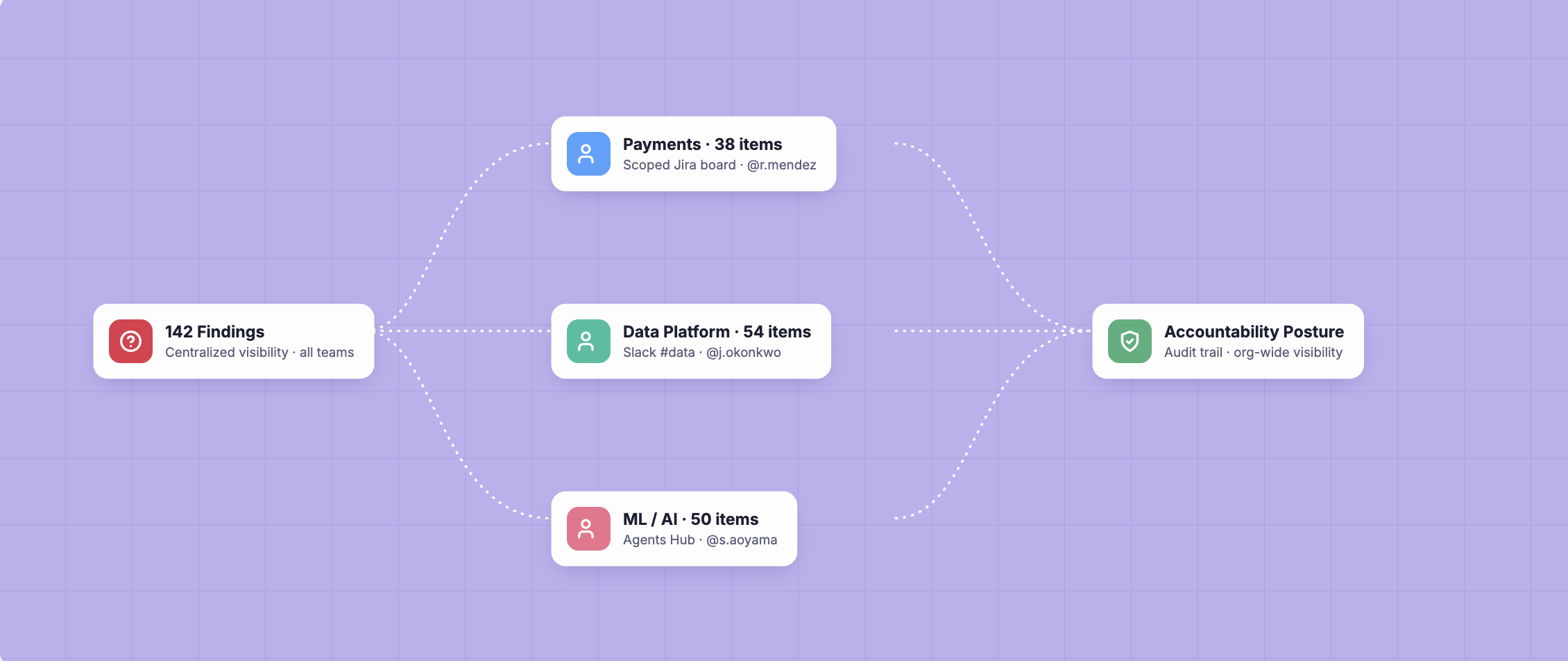
Governance execution and remediation workflows scoped to each team's resources. Every engineering team acts within their governance scope through the Policy Engine, AI Agents Hub, notifications, and ticketing — distributed accountability with centralized visibility, without operational dependency on a central governance team.
Your team's complete inventory
Continuously updated ownership mapping across every team, cloud, and account. Filtered by team, platform, or application. Operational visibility across the entire tech stack without manual inventory work or fragmented data sources.
Full context for every resource
Draftt correlates ownership data, production criticality, and governance context to prioritize operational risk. Every finding is scored by business impact — production exposure, blast radius, and accountability gaps — so engineering teams focus on what matters most, not what was flagged loudest.
Act on your tech debt
Governance execution and remediation workflows scoped to each team's resources. Every engineering team acts within their governance scope through the Policy Engine, AI Agents Hub, notifications, and ticketing — distributed accountability with centralized visibility, without operational dependency on a central governance team.
Every engineering team maintains continuously updated ownership coverage of their resources — filtered by team, platform, or application, across all accounts and cloud environments. Reduce operational dependency on centralized governance teams.
Self-service remediation workflows scoped to each team's resources. Tech debt elimination moves from a single overloaded team to every engineering team — with the evidence trail to prove it.
Drill into any account or resource in the tech stack. See ownership coverage, resource status, and open debt items per account — no more tech debt bottlenecks for platform and SRE teams.
Engineering leaders see accountability status across every team, account, and cloud — continuously updated, not assembled manually. Auditable accountability across the entire engineering organisation.
Draftt correlates production criticality, blast radius, and ownership gaps to surface the highest-risk tech debt first — so engineering teams focus on operational impact, not volume of findings.
Ownership data sourced from CMDB, IDP, cloud tags, git history, and deployment metadata — continuously reconciled, not captured at creation and left to drift.

Miki Manor
Director of Infrastructure Engineering

Book a 30-minute walkthrough. We'll connect your cloud environment and show you what’s coming, what it'll cost to defer, and how to plan for it.